

Lecture Description
Across the coffee sector, interest in regenerative and biodiversity-friendly farming is higher than ever. Yet when climate shocks, pests, diseases, or market downturns hit, farmers often fall back on conventional practices. This reliance is not necessarily due to lack of interest at the farm level, but because there is a dearth of trusted and accessible information and support systems in place to help farmers respond to agronomic challenges using non-conventional means. This panel brings together farmers, NGOs, and industry partners working on strategies to close that gap.
In this panel, we will explore ways that agricultural information actually moves in coffee communities: farmer-to-farmer learning, cooperative and extension systems, and industry-funded field programs. Our panelists will highlight examples from across the supply chain to show what’s working and where the biggest opportunities lie. We’ll also share early lessons from a new collaborative effort led by Smithsonian Bird Friendly and regional partners to build an applied research and extension pipeline for biodiversity-friendly agriculture. The goal is simple: equip farmers and extension agents with proven organic and regenerative techniques, and identify priority research gaps that industry and research networks can help close. Attendees will walk away with a clear understanding of how roasters, baristas, and supply-chain teams can engage, from supporting farm-level R&D to strengthening long-term extension networks that help producers stay resilient.
Date: Friday, April 10, 2026
Time: 12:00 pm - 1:15 pm
Location: Room 24AB
Category: Sustainability
Access: This lecture is free to attend with a World of Coffee entry badge. Register to attend World of Coffee here.
Please note that lecture sessions are open on a first-come, first-served basis. Early arrival is highly recommended to secure your seat.
Speakers
Dr. Emily Pappo (Moderator)
Postdoctoral Researcher, Smithsonian Bird Friendly Coffee & Cocoa
Dr. Emily Pappo is an agroecologist working on research related to climate resilience in coffee and cocoa systems. She is currently a postdoctoral fellow with the Smithsonian Bird Friendly® Coffee & Cocoa program. Before her academic career, Dr. Pappo worked in the coffee industry for over 10 years as a barista, roaster, and green coffee buyer.
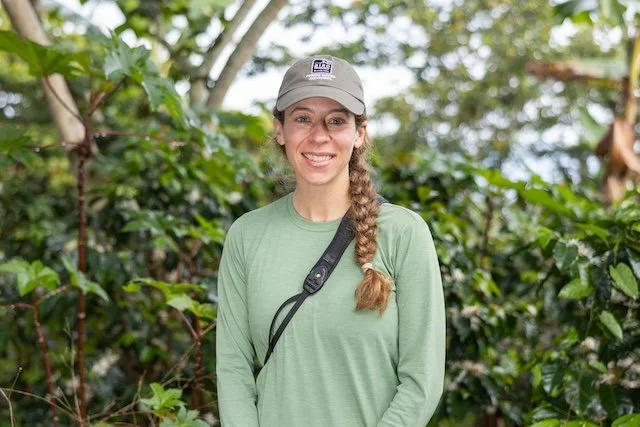
Dr. Ruth Bennett
Bird Friendly Program Director, Smithsonian Institution
Ruth Bennett is a Research Ecologist at the Smithsonian’s Conservation Biology Institute and Director of the Bird Friendly® program. Her work focuses on advancing biodiversity conservation in coffee and cocoa landscapes by linking ecological science, farmer extension services, and certification. She leads interdisciplinary research on biodiversity conservation, farm management, ecosystem services, and farmer decision-making at research sites across Latin America. Ruth works closely with producers, industry partners, and NGOs to promote practices that support livelihoods and conservation. She is committed to building science-based solutions that make biodiversity-friendly agriculture viable, impactful, and widely adopted across global supply chains.
Melissa Mazurkewicz - Latin America Program Manager, Smithsonian Bird Friendly. Melissa holds a master’s degree in Agricultural Education and Extension and leads Bird Friendly’s extension program. She’ll frame the conversation with a brief overview of what agricultural extension is and its value for agricultural learning and innovation.