

Lecture Description
Regenerative agriculture, rooted in long-standing Indigenous practices, offers coffee producers a pathway to restore ecosystems, strengthen climate resilience, and enhance both quality and productivity while protecting biodiversity and watersheds. At the same time, global buyers and investors increasingly expect suppliers to demonstrate strong Environmental, Social, and Governance (ESG) performance and meet emerging regulatory requirements. Integrating Responsible Business Conduct (RBC) into value chain management enables actors to reduce risks, improve compliance, and strengthen market competitiveness.
This panel explores how regenerative agriculture and agroecology—embedded within an RBC approach—can transform coffee landscapes, diversify farmer livelihoods, and align with new due diligence expectations. Panelists will highlight practical solutions, from dynamic agroforestry systems that integrate native trees with coffee to improved composting practices that convert coffee residues into nutrient‑rich soil amendments. These practices help rebuild soil health, conserve water, sequester carbon, boost biodiversity, and create shared economic value across supply chains.
Join the International Trade Centre (ITC), the Latin American and Caribbean Network of Fair Trade Small Producers and Workers (CLAC), and the Center for Circular Economy in Coffee (C4CEC) to examine how regenerative agricultural approaches address gaps identified toward regulatory compliance and how improved due diligence supports de‑risking, regulatory compliance, impact measurement, and growing need and demand for climate‑resilient coffee.
Date: Friday, April 10, 2026
Time: 9:00 am - 10:15 am
Location: Room 24AB
Category: Sustainability
Access: This lecture is free to attend with a World of Coffee entry badge. Register to attend World of Coffee here.
Please note that lecture sessions are open on a first-come, first-served basis. Early arrival is highly recommended to secure your seat.
Moderator
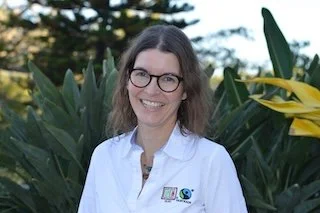
Anneke Theunissen
COO, CLAC - Fairtrade
Anneke Theunissen has worked with CLAC Fairtrade, the Latin American and Caribbean Network of Fairtrade Smallholder Producers and Workers, since 2013. Currently, she is Chief Operating Officer and coordinates the main operations of CLAC in the field, assisting approximately 900 Fairtrade Producer Organizations in their process of empowerment and organizational strengthening, human rights, access to markets, inclusion, climate resilience and advocacy.
Panelists
Vanusia Maria Carneiro Nogueira
Executive Director, International Coffee Organization (ICO)
Elder Romero
Export Manager, CAFICO - Honduras

Angela Pelaez
Director of Global sustainability and coporate compliance, RGC Coffee
Angela Peláez, from an agricultural family, is Director of Global Sustainability and Corporate Compliance at RGC Coffee. She specializes in sustainable sourcing, compliance, and impact-driven programs. At RGC, she led the design, development, and implementation of 3E, the company's flagship sustainability program, delivering measurable social, economic, and environmental benefits across coffee-producing countries. Her work strengthens supply chains, promotes biodiversity, climate resilience, and social equity, and improves traceability. Angela previously served on the SCA Sustainability Center's Farmworkers Committee and currently sits on advisory bodies for Fair Trade USA and Colombia's Coffee, Forest & Climate Agreement, focusing on making sustainability a strong business case.
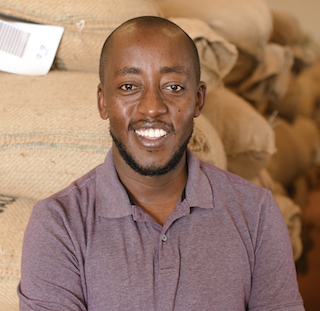
Kenneth Barigye
CEO, Mountain Harvest
Kenneth Barigye the Managing Director of Mountain Harvest, a Ugandan specialty coffee company working with smallholder farmers to produce high-quality, traceable coffees for global markets. With nearly a decade of experience in the coffee sector, he has led initiatives in regenerative agriculture, farmer financing, women and youth inclusion, and market access. Kenneth serves on the boards of the Commercial Coffee Producers Association of Uganda, the National Coffee Research Institute, and the Uganda Coffee Federation. He is passionate about globally positioning Uganda as an origin of specialty coffee while ensuring farmers earn sustainable incomes and participate meaningfully in the value chain.